Introduction to Coding and Data Analysis for Scientists
Week 1: Introduction and Data Types
Today’s Lecture
- Lecture 1: Introduction and Data Types
- Course Structure
- Setting up Noteable
- Introduction to Coding
- Data Types
- Practical
Course Structure
- This course will run for 20 weeks
- We will cover:
- Data types, conditionals and loops
- Building functions
- Numpy arrays and linear algebra in python
- Pandas dataframes
- Plotting and visualisation
- Classes:
- 1 lecture per week (Thursday)
- 1 small-group tutorial per two weeks (date should be on calendar)
About us
- Dr Francesco Turci (Course director, School of Physics)
- f.turci@bristol.ac.uk
- Dr Thomas Maullin-Sapey (lecturer, School of Mathematics)
- thomas.maullin-sapey@bristol.ac.uk
Lectures
- The weekly lecture will consist of
- ≈ 30-40 minutes presentation time covering:
- Key concepts
- Administrative points (e.g. homework submission etc)
- Code Demonstrations#
- ≈ 1-1.5 hours practical
- Designed to provide hands on experience
- Opportunity to ask for help from
- Lecturer
- PhD helpers
- Each other!
Assignments
- Formative:
- Weekly (optional) assignments available on quarto
- Summative:
- This module is 100% coursework
- 4 pieces of coursework
- Assignment 1 (15%)
- Assignment 2 (30%)
- Assignment 3 (15%)
- Assignment 4 (40%)
- Assignments 1-3 will be exercises
- Assignment 4 will be different
- Project report analysing a dataset
Online Material
The course material is available online via:
- Quarto – online searchable version
- Noteable – interactive interface we shall work in during class

Accessing Noteable
- Open Blackboard
- Go to
Introduction to Coding and Data Analysis for Scientists 2025 - Click
Unit Information and Resources - Open Noteable
- Make sure
Jupyter Classic (Legacy)is selected. - Click Start
- Make sure
- Click
+GitRepo - Paste into Git Repository URL:
git@github.com:TomMaullin/SCIF10002-2025.git - Press clone
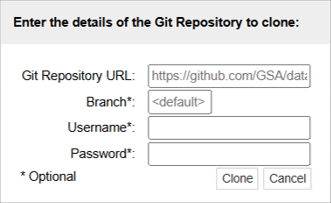
Introduction to Coding
- In this module, we shall be learning to code in Python
- Python is a programming language
In the same way humans communicate using different languages, there are many languages we can use to communicate with a computer
Python is particularly useful for:
- Analysing data
- Making plots and visualisations
- Running simulations
- Machine learning and AI
Learning to Code
In fact, learning to code is a lot like learning a language
When learning French, you might:
- Learn many phrases
- Practice writing sentences
- Speak to people who know the language
You can’t learn a language by listening to other people describe it…
Hands-on experience and regular practice are crucial!
Getting Started
- So… what actually is coding?
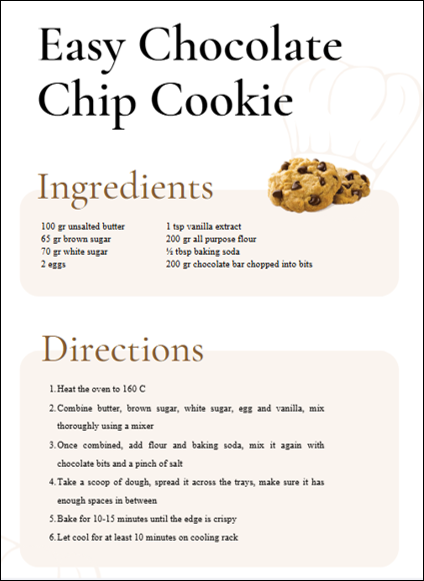
- You can think of writing code as like writing a recipe…
- You might start by specifying some ingredients…
- Then list some instructions…
- To get a desired output
- Coding is pretty similar
Getting Started
- You might start by specifying some inputs…
- Then list some instructions…
- To get a desired output
Here we are producing some output that might be difficult to compute or evaluate by hand.
Assigning Variables
- In this code,
xandyare variables - These are named pieces of data which we can use for future computations
- The
=symbol is the assignment operator.- Unlike in maths, this is an instruction
- E.g.
x=7means “Save the integer 7 under the variable name x”
Data Types
When writing the recipe, some foods were of the “same type”
- E.g. we had 2 eggs
In the same way, in coding we have different types of data
Today, we shall look at some of these
Understanding data types is important, as we want to use different data types for different tasks
Numeric Data Types
- The most ubiquitous data types are numeric
- Integers: Whole numbers/Integers
- ℤ = {…, -3, -2, -1, 0, 1, 2, 3,… }
- Floats: Decimal numbers
- ℝ = Real numbers
- We can convert between float’s and integers using the
floatandintfunctions.
- What do you think might happen if we convert
yto an integer?
Warning: A computer cannot actually describe arbitrarily small and large numbers – it approximates instead
Strings
- A string is a sequence of characters. Strings can contain:
- Letters
- Numbers (treated as characters)
- Punctuation
- Spaces
- Combinations of the above
- Nothing at all
- In practice, there are many things we may want to do with text in Python
- Split it into sentences
- Search through it
- Replace words
After todays practical you will be able to perform some of these operations!
Booleans
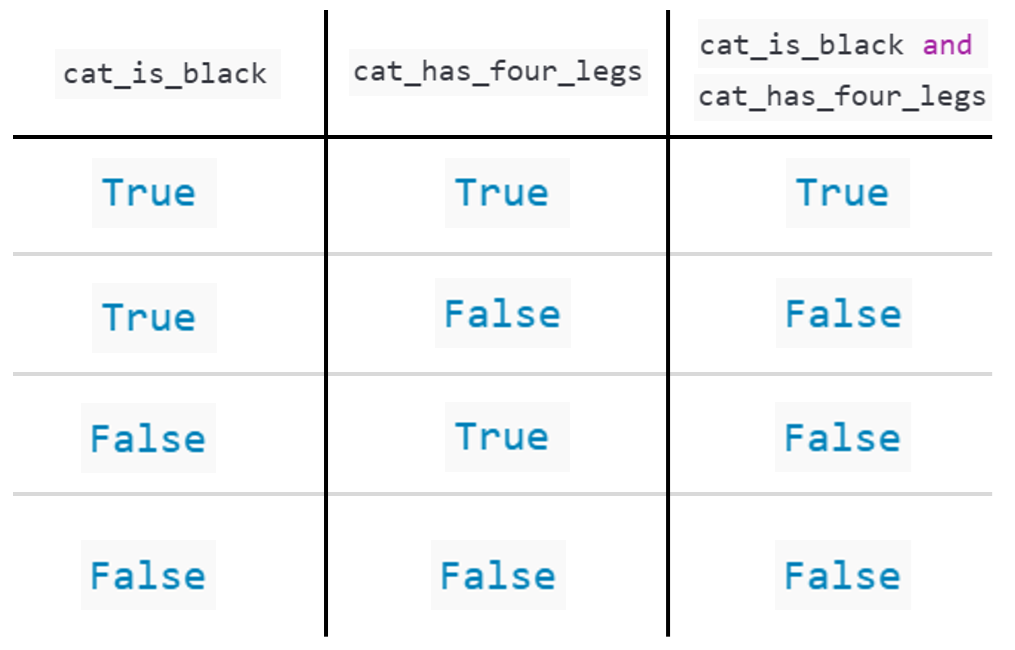
A Boolean is variable that can be either
TrueorFalseBooleans represent logical statements.
For instance, we might think of:
cat_is_blackas representing the sentence “The cat is black”cat_has_four_legsas representing the sentence “The cat has four legs”
We can use logical operators to combine Boolean statements
cat_is_black and cat_has_four_legsrepresents the sentence “The cat is black and has four legs”
Booleans
Collections
- We’ve now seen some simple examples of datatypes:
- Numeric, strings, and booleans.
- Data types don’t always have to be this simple!
- Sometimes we need data types that can hold more complex information.
- We’ll see more examples throughout the course but for now we’ll provide just one
- A collection is any in-built data type that can group multiple objects together.
- The most common collection is a list: an ordered group of items.
- Lists let you store, organize, and work with many values at once.
Practical
- We have students from a range of courses and backgrounds in this class
- Chemistry
- Physics
- Data Science
- Some people in the room will have less experience than others
- For the first few weeks, we shall try to account for the differences in ability where possible
Practical
- We now move over to Python
- Please open week_01_home.ipynb
- For the rest of today, you must work through a Python notebook
- You have a choice of one of three options